Oil of Oregano: Benefits, Side Effects and Dosage
Origanum vulgare
Also called: oregano oil, oregano essential oil, Origanum vulgare oil, wild oregano oil
Last reviewed by the Ledger Research Desk· Published · 9 min read
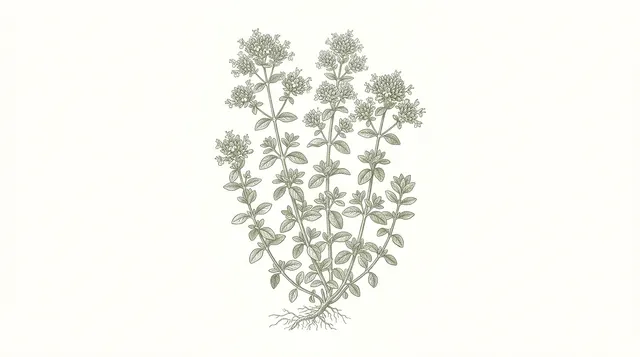
In short: Oil of oregano is the essential oil of Origanum vulgare, whose main phenols are carvacrol and thymol, sold as softgels, capsules and liquids. Evidence in people is thin: we found one small uncontrolled report and one retrospective chart review, so every outcome below is graded None. Most findings come from laboratory and mouse studies. Label amounts vary widely because oil, diluted oil and leaf extract are all listed in milligrams.
Quick facts
- Also known as
- Origanum vulgare · oregano oil · oregano essential oil · Origanum vulgare oil · wild oregano oil
- Type
- Botanicals
- Source
- The steam-distilled essential oil of the oregano plant Origanum vulgare, rich in the phenols carvacrol and thymol; sold in the US as softgels, capsules and liquids, often diluted in a carrier oil.
- Common forms
- Essential oil (steam-distilled), often in a carrier oil — carvacrol and thymol (phenolic marker compounds; some labels state a percentage)[4]
- Emulsified oil of oregano (trial material)
- Leaf extract in water and alcohol (tincture)
- Dried oregano leaf powder in capsules
- Typical label dose
- Median 150 mg per serving (middle half of labels: 60–285 mg)
From 79 of 114 randomly sampled US product labels in the NIH Dietary Supplement Label Database, downloaded Nov 27, 2026. Not a recommended dose. How we counted - Evidence at a glance
- Who should avoid it
- Anyone considering undiluted essential oil by mouth (a 2022 review says essential oils should never be taken undiluted)[6]
- Pregnancy (MedlinePlus lists oregano as possibly unsafe by mouth in medicinal amounts; food amounts only)[2]
- People allergic to Lamiaceae plants such as basil, lavender, marjoram, mint and sage[2]
- People with bleeding disorders or planned surgery (large doses might increase bleeding risk; MedlinePlus advises stopping two weeks before surgery)[2]
- Key interactions
- Regulatory status
- US: Sold as a dietary supplement; manufacturers and distributors are responsible for evaluating safety and labeling before marketing, and FDA does not approve supplements before sale (as of Nov 28, 2026)[1]
- Last reviewed
- · Editorial review by the Ledger Research Desk
On this page
What is oil of oregano?
Oil of oregano is the volatile oil steamed or pressed from the leaves and flowering tops of Origanum vulgare (oregano), a Lamiaceae (mint-family) herb. It differs from the dried herb on a spice shelf and from a leaf extract made in water and alcohol. In the US it is sold as a dietary supplement, so FDA does not approve it before sale; manufacturers and distributors are responsible for evaluating safety and labeling before marketing [1].
People look it up mostly for infections, gut complaints and cholesterol. Because those are the topics where claims are loudest, this page reports what each named study measured. Browse other plant ingredients in the botanicals section or the A to Z index.
Oil of oregano forms and composition
| Form | Standardized to | Typical extract ratio | Source |
|---|---|---|---|
| Essential oil (steam-distilled), often in a carrier oil | carvacrol and thymol (phenolic marker compounds; some labels state a percentage) | Not established | [4] |
| Emulsified oil of oregano (trial material) | Not established | Not established | — |
| Leaf extract in water and alcohol (tincture) | Not established | Not established | — |
| Dried oregano leaf powder in capsules | Not established | Not established | — |
The phrase "oregano oil" on a shelf covers four kinds of material, and the milligram figure on the Supplement Facts panel means something different for each.
Essential oil. This is the steam-distilled oil. Its antimicrobial activity in the laboratory is linked to its phenolic compounds, carvacrol and thymol [4]. Some labels state a carvacrol or thymol percentage, such as "minimum 35% carvacrol, 27.5% thymol" in one capsule in our sample. About 39% of the labels we sampled carried a standardization statement of this kind.
Diluted oil in a carrier. Most softgels and capsules mix the essential oil with an edible carrier oil, so the milligram row can be the oil alone or the whole fill. One label in our sample listed a softgel at 150 mg "as 10:1 extract equivalent to 1500 mg of Oregano", which describes the herb used to make the extract, not the oil.
Leaf extract (tincture). This is oregano leaf soaked in water and alcohol. A liquid example in our sample listed 2 mL of "Oregano Leaf Extract" as 1,893 mg, with a 1:10 herb-to-solvent ratio and a water and grain-spirits base. That figure is a liquid serving, not an essential oil dose.
Dried herb. Several capsules list "Oregano" at 450 to 1,500 mg. That is ground leaf, the culinary herb in capsule form, and it is not the oil.
Oregano oil, oregano leaf extract and dried oregano are different materials, so a result from one should not be read as a result for another.
The figure below summarizes what the milligram figure means in each form.
Product forms in our sample were split almost evenly across softgels, liquids and capsules.
What the research shows
We grade each outcome separately using the rules on our methodology page. The picture is simple: no randomized controlled human trial of oregano oil was found for any outcome people commonly search for. What exists is two small human reports, one mouse study and laboratory work, summarized below.
Intestinal parasites None
A 2000 report gave 600 mg a day of emulsified oil of oregano to 14 adults whose stool samples were positive for parasites, for six weeks. Afterward, Entamoeba hartmanni was no longer found in four people, Endolimax nana in one, and Blastocystis hominis in eight [3]. The abstract describes no placebo group, the sample was 14 people, and the published abstract does not name a funder. Graded None, because there is no controlled trial.
Small intestinal bacterial overgrowth (SIBO) None
A retrospective chart review of 104 patients with a positive lactulose breath test compared four weeks of herbal therapy (37 patients) with rifaximin (67 patients). Follow-up breath tests were negative in 46% of the herbal group and 34% of the rifaximin group, a difference that was not statistically significant [5]. The herbal arm used combination formulas from supplement companies, not oregano oil alone, patients chose their treatment, and the authors call for prospective studies. Graded None for oregano oil specifically.
Candida and fungal growth None
The best-known source is a laboratory and mouse report. Origanum oil completely inhibited Candida albicans growth in a dish at 0.25 mg per mL, and in a mouse model of systemic candidiasis, daily oil doses were followed by 80% survival over 30 days, while untreated mice died within 10 days [4]. Results in dishes and mice do not show what happens in people, and we found no controlled human trial. Graded None.
Colds, flu and other infections None
Pages about oregano oil often cite its antibacterial and antiviral activity. That activity has been measured in laboratory settings, such as the Candida work above, and we found no controlled human trial in which oregano oil was tested against colds, influenza or bacterial infections. The absence of a trial means the evidence is insufficient, not that the oil is shown to fail. Graded None.
Cholesterol and blood lipids None
We found no controlled human trial that measured cholesterol or other blood lipids after oregano oil. Searches mostly return animal feed studies and general interest in oregano as a food. Graded None.
Oil of oregano dosage
What US labels list
Median 150 mg per serving across 79 labels that state an amount. The middle half of labels list 60–285 mg; the full range is 11.5–3,000 mg. 54.4% of sampled products contain Oil of Oregano as the only active ingredient. 39.2% of the labels with an amount name a standardization or marker compound. This describes what products contain, not a recommended dose.
2 sampled labels did not list oil of oregano as a named ingredient row; 33 listed it without a usable amount per serving (for example inside a proprietary blend).
Seeded random sample of 114 on-market products from the NIH Dietary Supplement Label Database (search: "oregano oil", 178 unique on-market products found), downloaded Nov 27, 2026. Not weighted by sales. Method
No official recommended or upper intake exists for oregano oil, and we do not offer one. MedlinePlus states that as a supplement, "there isn't enough reliable information to know what an appropriate dose of oregano might be" [2].
| Study | Population | Dose and form | Duration |
|---|---|---|---|
| Force 2000 | 14 adults with enteric parasites | 600 mg/day emulsified oil of oregano | 6 weeks |
| Chedid 2014 | 37 SIBO patients (herbal arm, chart review) | Combination herbal formulas; amounts not stated in the record we read | 4 weeks |
| Manohar 2001 | Mice (Candida model) and laboratory culture | Oil by mouth in mice; 0.25 mg per mL in culture | Mice followed 30 days |
Sources for the table are in the research section above. In our sample of 114 on-market US labels, drawn from 178 products matched by the search "oregano oil", 112 listed oregano as a named row and 79 stated a numeric amount. The median was 150 mg per serving (middle half 60 to 285 mg; range 11.5 to 3,000 mg). Among the 55 products where it is the only active ingredient, the median was also 150 mg (middle half 60 to 250 mg). Details are on our label-data method.
Two cautions apply. The lowest and highest figures mix materials: a 2 mL tincture listed as 1,893 mg and a 1,500 mg "Oregano" softgel are not the same kind of dose as 50 mg of oil standardized to carvacrol. And 33 of the 112 labels listed oregano without a usable amount, often inside a proprietary blend. We do not present any label dose as a recommendation, and it differs from the 600 mg a day of emulsified oil in the one human report.
Oil of oregano side effects and who should avoid it
We did not find a systematic safety study of oregano oil supplements in people. The Force report abstract does not list adverse events, and in the SIBO chart review the abstract mentions one case of diarrhea in the herbal arm [5].
Undiluted oil. A 2022 review of essential oils notes that irritation depends on local concentration and that essential oils "should never be taken undiluted" [6]. This is why supplement oil is sold in capsules, softgels or measured drops in a carrier. It also means a dropper bottle labeled as pure oil deserves a question to a pharmacist before any use.
Food versus supplement amounts. MedlinePlus states that oregano leaf and oregano oil are likely safe when eaten in foods, and that there is not enough reliable information to judge larger amounts [2].
Pregnancy. MedlinePlus lists oregano as possibly unsafe when taken by mouth in medicinal amounts during pregnancy and advises food amounts only [2]. Safety during breastfeeding and in children has not been established in the sources we reviewed.
Allergy. MedlinePlus notes that oregano can cause reactions in people allergic to plants in the Lamiaceae family, with basil, hyssop, lavender, marjoram, mint and sage listed as examples [2].
Bleeding and surgery. MedlinePlus says large doses of oregano might increase the risk of bleeding and advises stopping two weeks before surgery for people using large doses [2]. Anyone with a bleeding disorder or a scheduled operation can ask a surgeon or pharmacist about it.
Oil of oregano interactions
| Drug or supplement | Possible effect | Source |
|---|---|---|
| Antidiabetes drugs | Listed as a moderate interaction: oregano might lower blood sugar, and combined use might cause blood sugar to drop too low (monograph covers oregano in general) | [2] |
| Anticoagulant and antiplatelet drugs | Listed as a moderate interaction: large doses of oregano might increase the risk of bleeding | [2] |
| Copper, iron and zinc supplements | Possible reduced absorption of these minerals | [2] |
| Drugs broken down by CYP1A2 and CYP3A4 | Listed as a minor interaction | [2] |
The interactions below come from the MedlinePlus oregano monograph, which covers oregano in general rather than the oil alone. It lists a moderate interaction with antidiabetes drugs, because oregano might lower blood sugar, and with anticoagulant and antiplatelet drugs, because large doses might increase bleeding risk. It lists minor interactions with drugs broken down by the liver enzymes CYP1A2 and CYP3A4, and a possible reduction in absorption of copper, iron and zinc [2]. It reports no known interactions with foods. These entries are cautions from a reference page, not results from trials of the oil, so a pharmacist is the right person to ask about a specific medicine.
How to read an oil of oregano label
Start with the ingredient row, because the same unit covers different materials. These examples come from our sample, without brand names.
- "Oregano Oil, 50 mg (minimum 35% carvacrol, 27.5% thymol)" states an oil amount and two marker phenols.
- "Oil of Oregano, 150 mg, as 10:1 extract equivalent to 1500 mg of Oregano" gives an extract amount and the starting herb; 150 mg is the amount in the capsule, not 1,500 mg.
- "Oregano Leaf Extract, 1,893 mg per 2 mL, 1:10 in water and grain spirits" is a tincture serving, not an oil dose.
- "Oregano, 450 mg" with no other wording is most likely ground leaf.
- "Oregano Oil" listed with no amount, or with "100%" and no weight, gives no per-serving figure.
Check four things. First, the material: oil, diluted oil, leaf extract or dried herb. Second, whether a carvacrol or thymol percentage is stated, since 39% of sampled labels did; that tells you about composition, not a tested effect. Third, the serving unit, which ranges from a single drop to 2 mL to a capsule. Fourth, whether the row sits inside a proprietary blend. To compare two products, convert each to milligrams of the same material per day, and do not compare an oil row with a tincture row. Notes on how we handle label data are at the Research Desk. For comparison with other ingredients that have trial data, see lion's mane, astaxanthin and moringa.
Bottom line
We would regard oil of oregano as a lab-stage ingredient. The strongest items in the record are a 14-person uncontrolled report on intestinal parasites and a retrospective chart review of herbal formulas for SIBO, and neither is a controlled trial of the oil. The Candida findings come from dishes and mice. Labels add noise, because oil, diluted oil, leaf extract and dried herb are all listed in milligrams, and a third of sampled labels give no amount. We would want to see randomized, placebo-controlled trials of a single, described oil product, with carvacrol content reported, before grading any outcome above None. Anyone who is pregnant, allergic to mint-family plants, taking blood-sugar or anticoagulant medicines, or facing surgery can bring the label to a clinician or pharmacist.
Sources
- Dietary Supplements. FDA, 2026. Accessed .
- Oregano. MedlinePlus, 2026. Accessed .
- Inhibition of enteric parasites by emulsified oil of oregano in vivo. Force M, Sparks WS, Ronzio RA, 2000. Accessed .
- Antifungal activities of origanum oil against Candida albicans. Manohar V, et al, 2001. Accessed .
- Herbal therapy is equivalent to rifaximin for the treatment of small intestinal bacterial overgrowth. Chedid V, et al, 2014. Accessed .
- Essential Oils as Multicomponent Mixtures and Their Potential for Human Health and Well-Being. Bunse M, et al, 2022. Accessed .
Frequently asked questions
What are the benefits of oil of oregano?
No controlled human trial shows a specific benefit, so we grade every outcome None. The human data are a 14-person uncontrolled report on intestinal parasites and a chart review of herbal formulas for SIBO. Findings on Candida come from laboratory and mouse work.
What are the side effects of oil of oregano?
We found no systematic safety data for oregano oil supplements. A review of essential oils says they should never be taken undiluted, and MedlinePlus lists pregnancy, mint-family allergy, bleeding and blood-sugar cautions for oregano.
How much oil of oregano is on a typical US label?
Among 79 sampled labels that state an amount, the median is 150 mg per serving, with the middle half between 60 and 285 mg. The figures mix oil, diluted oil and leaf extract, so they are not directly comparable.
Is oil of oregano the same as oregano leaf extract?
No. Oil is steam-distilled and concentrated, while a leaf extract is made with water and alcohol, so the milligram figure on each label describes a different material.
Is oil of oregano the same as the oregano used in cooking?
No. Culinary oregano is the dried herb eaten in food, which MedlinePlus describes as likely safe in food amounts; the oil is a concentrated product with its own evidence and cautions.
Related ingredients
More Botanicals →


Educational information only. Not medical advice. Talk to a clinician or pharmacist before starting a supplement, especially if you are pregnant, take medicines or have a health condition. Spotted an error? Tell us.