Moringa: Benefits, Side Effects and Dosage
Moringa oleifera
Also called: drumstick tree, moringa leaf, malunggay, Moringa oleifera leaf powder
Last reviewed by the Ledger Research Desk· Published · 10 min read
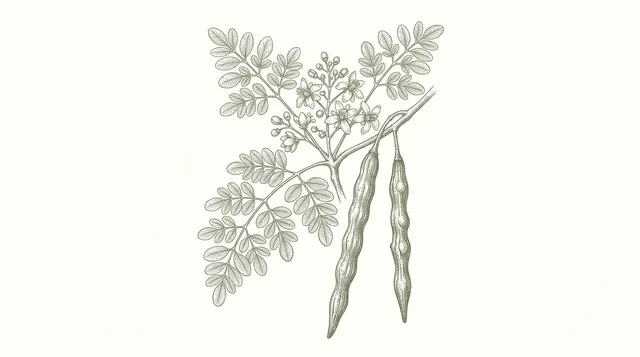
In short: Moringa (Moringa oleifera) is a tree whose leaves are sold as powders, capsules and extracts. Human evidence is small and mixed: a 2025 meta-analysis of nine randomized trials found no consistent effect on blood sugar, cholesterol or blood pressure, with very low certainty. Its most-searched areas, blood sugar and breast milk volume, are graded Limited. The leaf is the plant part tested in trials.
Quick facts
- Also known as
- Moringa oleifera · drumstick tree · moringa leaf · malunggay · Moringa oleifera leaf powder
- Type
- Botanicals
- Source
- A tree native to India; supplements mostly use the dried leaf as powder, capsules or extract, and the leaf is the part tested in human trials.
- Common forms
- Typical label dose
- Median 500 mg per serving (middle half of labels: 125–800 mg)
From 66 of 120 randomly sampled US product labels in the NIH Dietary Supplement Label Database, downloaded Nov 27, 2026. Not a recommended dose. How we counted - Evidence at a glance
- LimitedBlood sugar and HbA1c
- LimitedCholesterol and triglycerides
- LimitedBlood pressure
- LimitedBreast milk supply
- LimitedAnemia and nutrient status
- Who should avoid it
- People at high risk of blood clots (LactMed advises caution; moringa may stimulate clotting)[2]
- People with liver disease or a history of liver injury from supplements (one case of acute anicteric hepatitis recorded)[1]
- Anyone considering seed, root or bark preparations (no reliable human safety data found; seed toxicology limits rated unreliable)[12]
- Key interactions
- No drug interactions documented by the sources we checked. Details
- Regulatory status
- US: Sold as a dietary supplement; supplements do not need extensive FDA approval before marketing, and labeled and actual ingredients may differ (as of Nov 28, 2026)[2]
- Last reviewed
- · Editorial review by the Ledger Research Desk
On this page
What is moringa?
Moringa is a fast-growing tree native to India. Its leaves, seeds, bark, roots, sap and flowers are eaten as food and used in traditional medicine [1]. Supplement makers mostly sell dried leaf, as powder to stir into drinks or packed into capsules, plus extracts, tablets, gummies and liquids. In the US it is sold as a dietary supplement, and supplements do not need extensive FDA approval before marketing [2].
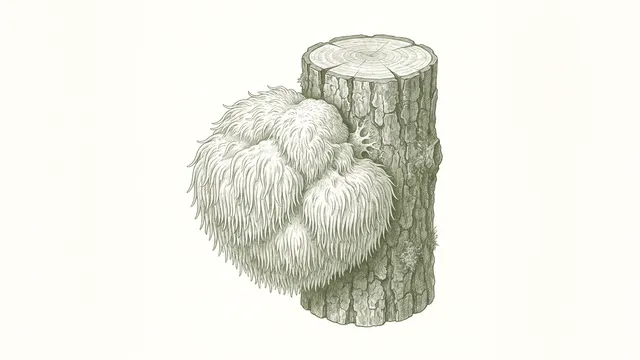
People search for it mainly for blood sugar, cholesterol, blood pressure, breast milk supply and anemia. We report what each named study measured for those topics. Other plant ingredients are in the botanicals section, and the full list is in the A to Z index. For a similar fact-first page on a mushroom, see lion's mane.
Moringa forms and composition
| Form | Standardized to | Typical extract ratio | Source |
|---|---|---|---|
| Leaf powder (capsules, loose powder) | leaf weight; trials in the 2025 meta-analysis used 1 to 30 g per day | Not established | [3] |
| Leaf extract (capsules, gummies, tablets) | Not established | 4:1 or 10:1 on labels in our sample | [4] |
| Seed, root or bark preparations | Not established | Not established | — |
"Moringa" on a label usually means dried leaf, but the label does not always say so. The forms below behave differently, and trial results do not transfer neatly between them.
Leaf powder. Dried, ground leaf. The trials in the 2025 meta-analysis mostly used leaf powder, from 1 g to 30 g a day [3]. One prediabetes trial gave 2,400 mg a day as six 400 mg capsules [4]. Powder sold by the scoop is often a large serving in which moringa is only one row.
Leaf extract. A concentrate made with a solvent. Labels in our sample state ratios such as 4:1 or 10:1, meaning a stated weight of leaf was used to make one unit of extract. An extract milligram is not the same as a powder milligram.
Seed and other parts. A 2026 systematic review of seed toxicology reported limits (a lethal dose of 14,000 to 15,000 mg per kg of body weight and no-effect doses of 100 to 257 mg per kg per day) but rated the underlying studies low quality, so the authors called the limits unreliable [12].
Blends. Moringa appears inside greens powders and "superfood" blends, often with no separate amount.
About 26% of the 120 labels in our sample carried some standardization or extract-ratio statement. Because standardization on a moringa label usually describes the extract ratio rather than a measured compound, it says little about what a trial tested. The figure below shows the form mix; the label-sample method is on our methodology page.
What the research shows
We grade each outcome separately using the rules on our methodology page. The best summary is a 2025 meta-analysis of nine randomized trials (12 study arms, 341 people on moringa and 308 controls) that rated certainty very low for every outcome [3]. The authors concluded that no consistent cardiometabolic effect was shown. Trials differed widely in dose, duration and population, and most did not control diet.
Blood sugar and HbA1c Limited
In a 12-week double-blind trial of 65 adults with prediabetes in Spain, 31 took 2,400 mg of leaf powder a day as capsules and 34 took placebo. Fasting glucose and HbA1c moved in opposite directions, down with moringa and up with placebo; microbiota, liver and kidney markers did not differ. It was funded by a Spanish government research grant [4]. In 40 Nigerian adults with type 2 diabetes given 20, 40 or 60 g of moringa leaves a day for 14 days, fasting glucose did not differ between groups [6]. Pooling seven trials, the meta-analysis found a standardized mean difference of −0.12 for fasting glucose (95% confidence interval −0.38 to 0.14) and −0.30 for HbA1c across three trials (−0.65 to 0.05); neither was statistically significant [3]. Graded Limited.
Cholesterol and triglycerides Limited
The meta-analysis pooled five trials and found no significant difference in total cholesterol (−0.20, 95% CI −0.76 to 0.35), LDL cholesterol (−0.30, −1.10 to 0.51) or triglycerides (−0.14, −0.71 to 0.44), with inconsistency between trials above 80% [3]. In the follow-up analysis of the 12-week prediabetes trial, 2,400 mg a day of leaf powder produced lipid change scores that did not differ from placebo [5]. In the Nigerian trial, triglycerides rose in one group, but no measure differed between groups after adjusting for baseline [6]. Graded Limited; results are null or inconsistent, not demonstrated.
Blood pressure Limited
Pooled systolic pressure did not differ (−0.14, 95% CI −0.47 to 0.18). Diastolic pressure was lower with moringa (−0.41, −0.75 to −0.07, p = 0.02), but the finding disappeared in sensitivity analyses that excluded certain studies [3]. The prediabetes trial's blood pressure change scores did not differ from placebo [5]. Graded Limited.
Breast milk supply Limited
A 2025 systematic review found eight randomized trials in healthy postpartum women, lasting 3 to 10 days, and reported milk volume up to 400 mL a day higher than controls and a mean prolactin difference of 231.72 ng/mL, with most studies at low to moderate risk of bias [7]. The LactMed entry cites a meta-analysis of 14 studies and 865 subjects that found higher prolactin and milk volume, and notes that long-term effects on breastfed infants are not well studied [2]. One double-blind trial in Thailand gave 88 women 900 mg of leaf capsules a day or placebo; median day-3 milk volume was 73.5 mL with moringa and 50 mL with placebo, a 47% difference that was not statistically significant (p = 0.19) [8]. Trials are short, products differ and one randomized trial missed significance. Graded Limited.
Anemia and nutrient status Limited
A 2022 systematic review included seven human studies; the authors reported that higher doses (14 to 30 g a day), but not lower doses below 10 g, were followed by higher hemoglobin in children with iron-deficiency anemia and in postmenopausal women. They called the evidence "limited but promising" [9]. A 3-month pilot trial in Kenya gave breastfeeding mothers 20 g of leaf powder a day in porridge; milk vitamin A did not change and milk carotenoids rose only in part [10]. A narrative review of 12 studies in pregnancy and breastfeeding reported no contraindications in the included studies [11]. Funding was not stated in the abstracts of the two reviews on anemia. Graded Limited.
Moringa dosage
What US labels list
Median 500 mg per serving across 66 labels that state an amount. The middle half of labels list 125–800 mg; the full range is 10–5,000 mg. 35.8% of sampled products contain Moringa as the only active ingredient. 25.8% of the labels with an amount name a standardization or marker compound. This describes what products contain, not a recommended dose.
16 sampled labels did not list moringa as a named ingredient row; 38 listed it without a usable amount per serving (for example inside a proprietary blend).
Seeded random sample of 120 on-market products from the NIH Dietary Supplement Label Database (search: "moringa", 258 unique on-market products found), downloaded Nov 27, 2026. Not weighted by sales. Method
No official recommended or upper intake exists for moringa in the sources we read, and we do not offer one. Trials used amounts from under 1 g to tens of grams of leaf.
| Study | Population | Dose and form | Duration |
|---|---|---|---|
| Gómez-Martínez 2021 | 65 adults, prediabetes | 2,400 mg/day leaf powder capsules | 12 weeks |
| Fungtammasan 2022 | 88 postpartum women | 900 mg/day leaf capsules | Day-3 outcome |
| Afiaenyi 2025 | 40 adults, type 2 diabetes | 20, 40 or 60 g/day leaves | 14 days |
| Attia 2024 | 50 breastfeeding women, Kenya | 20 g/day leaf powder in porridge | 3 months |
| Crișan 2025 meta-analysis | Adults in 9 trials | 1 to 30 g/day leaf powder (also one 900 mg polyherbal extract) | 2 weeks to 6 months |
Sources for the table are in the research section above. In our sample of 120 US labels, 104 named moringa as an ingredient row and 66 gave a numeric amount per serving. The median was 500 mg (middle half 125 to 800 mg; range 10 to 5,000 mg). Among 37 single-ingredient products with an amount, the median was 600 mg (middle half 500 to 1,000 mg). Another 38 labels listed moringa with no usable amount, for example inside a blend. Details are on our label-data method.
Two cautions apply. A label milligram figure for a 4:1 or 10:1 extract is not the same as the same weight of powder, and the typical label serving is far below the grams of leaf used in several trials. We do not present any label dose as a recommendation.
Moringa side effects and who should avoid it
The LactMed entry states that studies reported no serious short-term adverse effects in nursing mothers or their breastfed infants, and that long-term effects on infants are not well studied [2]. The abstract of the 2025 meta-analysis does not report adverse event counts, so we cannot give a side-effect rate.
LiverTox describes moringa as generally well tolerated and not linked to serum enzyme elevations during therapy, but records one case of acute anicteric hepatitis (liver inflammation without jaundice) attributed to it [1]. It is a single case, and the abstract we read gives no further detail.
LactMed advises caution for people at high risk of blood clots, because moringa may stimulate clotting [2]. People with a history of blood clots, or a liver condition, are the groups most worth raising moringa with a clinician before taking it. We did not find a source establishing safety in pregnancy, and none for root or bark preparations in humans; the seed toxicology literature is rated unreliable [12]. Anyone planning surgery or taking prescription medicines can ask a pharmacist whether it is a concern for them.
Moringa interactions
None of the sources we checked document a drug interaction for Moringa. That is not proof that none exists; ask a pharmacist about your own medicines.
We found no documented drug, herb or supplement interactions for moringa in the sources we read. The one safety signal that touches medicines is LactMed's clotting caution, which is not tied to a named drug [2]. The absence of reports is not proof of safety: the trials were small. Diabetes medicines, blood pressure medicines and anticoagulants are not examined in the trials we read, so a pharmacist is the right person to ask. We do not list theoretical interactions without a source.
How to read a moringa label
Start with the ingredient row. These examples come from our sample, without brand names.
- "Moringa leaf powder, 500 mg, organic" in two capsules names the plant part and gives a powder weight.
- "Moringa oleifera extract, 1,200 mg, crushed or pulverized 4:1 extract" in two capsules lists extract weight, not leaf weight.
- "Moringa Leaf Extract, 400 mg, 10:1 extract, equivalent to 400 mg whole herbs" in two gummies pairs a ratio with an equivalence figure; the two numbers do not obviously match, so read the row twice.
- "Moringa" at 100 mg inside a 6.79 g powder serving means moringa is a small part of the serving.
- "organic Moringa oleifera" at 10 or 11 mg per four capsules is a trace amount compared with trial doses.
- "Moringa Leaf Extract" with no amount, or inside a blend, gives no per-serving dose.
Check four things. First, the plant part: leaf, seed, root or a mix. Second, the serving size: how many capsules, grams or gummies one serving is. Third, whether the amount is powder or an extract, and its ratio. Fourth, whether it is a proprietary blend, which hides the amount. To compare two products, convert each to mg of the named ingredient per day and note whether it is powder or extract. More on how we handle label data is at the Research Desk.
Bottom line
We regard moringa as an under-studied ingredient with a lot of marketing. The best human data are small trials of leaf powder, and a 2025 meta-analysis rated its certainty very low, so we grade blood sugar, cholesterol, blood pressure, lactation and anemia all as Limited. We would want larger, longer trials of one clearly described leaf product, with funding disclosed, before placing any outcome higher. The label sample shows another problem: typical servings are hundreds of milligrams, while several trials used grams, and 38 of 104 labels naming moringa give no amount. Anyone with a clotting history, a liver condition or a breastfeeding plan can take the label, not the marketing copy, to a clinician or pharmacist.
Sources
- Moringa. LiverTox, NIDDK, 2012. Accessed .
- Moringa. LactMed, NICHD, 2006. Accessed .
- Effects of Moringa oleifera Lam. Supplementation on Cardiometabolic Outcomes: A Meta-Analysis of Randomized Controlled Trials with GRADE Assessment. Crișan D, et al, 2025. Accessed .
- Moringa oleifera Leaf Supplementation as a Glycemic Control Strategy in Subjects with Prediabetes. Gómez-Martínez S, et al, 2021. Accessed .
- Effects of Moringa oleifera Lam. Supplementation on Inflammatory and Cardiometabolic Markers in Subjects with Prediabetes. Díaz-Prieto LE, et al, 2022. Accessed .
- Effects of Moringa oleifera leaves on the blood glucose, blood pressure, and lipid profile of type 2 diabetic subjects: A parallel group randomized clinical trial of efficacy. Afiaenyi IC, et al, 2025. Accessed .
- Moringa oleifera Supplementation as a Natural Galactagogue: A Systematic Review on Its Role in Supporting Milk Volume and Prolactin Levels. Ammar M, et al, 2025. Accessed .
- The effect of Moringa oleifera capsule in increasing breast milk volume in early postpartum patients: A double-blind, randomized controlled trial. Fungtammasan S, Phupong V, 2022. Accessed .
- The impact of Moringa oleifera leaf supplementation on human and animal nutrition, growth, and milk production: A systematic review. Brar S, et al, 2022. Accessed .
- Impact of Maternal Moringa oleifera Leaf Supplementation on Milk and Serum Vitamin A and Carotenoid Concentrations in a Cohort of Breastfeeding Kenyan Women and Their Infants. Attia SL, et al, 2024. Accessed .
- The Impact of Moringa oleifera Supplementation on Anemia and other Variables during Pregnancy and Breastfeeding: A Narrative Review. Rotella R, et al, 2023. Accessed .
- A systematic review of Moringa oleifera seed toxicity and safety: Comparative analysis of toxicology methodologies and results. Russell JJ, et al, 2026. Accessed .
Frequently asked questions
What are the benefits of moringa?
Small human trials have measured blood sugar, cholesterol, blood pressure, breast milk volume and hemoglobin, with mixed results. A 2025 meta-analysis of nine randomized trials found no consistent effect on cardiometabolic measures and rated certainty very low. We grade every outcome Limited.
What are moringa side effects?
Studies reviewed by LactMed reported no serious short-term adverse effects in nursing mothers, but long-term effects are not well studied. LiverTox records one case of acute hepatitis, and LactMed cautions people at high risk of blood clots.
How much moringa is on a typical US label?
Among 66 sampled labels that state an amount, the median is 500 mg per serving, with the middle half between 125 and 800 mg. Single-ingredient products have a median of 600 mg. Amounts may be extract or powder, so they are not always comparable.
Is moringa safe while breastfeeding?
LactMed reports no serious short-term adverse effects in nursing mothers or infants in the studies it reviewed, and notes that long-term infant effects are not well studied. It also advises caution for people at high risk of blood clots.
Are moringa leaf, seed and root the same?
No. Leaf is the part tested in the human trials we cite. Seed toxicology limits are rated unreliable, and we found no human safety study for root or bark.
Related ingredients
More Botanicals →
Educational information only. Not medical advice. Talk to a clinician or pharmacist before starting a supplement, especially if you are pregnant, take medicines or have a health condition. Spotted an error? Tell us.